

In the ever-evolving world of handheld gaming, two titans are vying for supremacy: the Lenovo Legion Go and the Steam Deck OLED. Picture this: one device promises the power of a gaming laptop in your hands while the other dazzles with vibrant visuals and a cult following. It’s like choosing between a sleek sports car and a classic muscle machine—both have their charm, but which one revs your engine?
Overview of Lenovo Legion Go and Steam Deck OLED
Lenovo Legion Go stands out with its robust performance and gaming laptop capabilities. This handheld device caters to gamers who seek high-quality graphics and processing power similar to traditional laptops. The Lenovo Legion Go features advanced hardware, ensuring seamless gameplay for resource-intensive titles.
Steam Deck OLED, on the other hand, captivates users with its vivid display and immersive visuals. Gamers appreciate the high contrast and color accuracy offered by the OLED screen, enhancing the overall gaming experience. Additionally, its ergonomic design fits comfortably in hands during extended gaming sessions.
Battery life is another important aspect where both devices differ. The Lenovo Legion Go, with its substantial battery, supports long hours of gaming, while the Steam Deck OLED’s efficient power management strikes a balance between performance and longevity.
Portability plays a crucial role in device selection. Weighing slightly less, the Steam Deck OLED provides ease of transport, while the Lenovo Legion Go, although a bit heavier, compensates with higher performance bandwidth. Both devices support a range of accessories, expanding their functionality and customization.
Another significant factor is compatibility. The Steam Deck OLED runs on a modified version of SteamOS, allowing access to an expansive library of games. In contrast, the Lenovo Legion Go operates on Windows, providing access to the full range of PC games, appealing to a wider audience.
Ultimately, the choice between Lenovo Legion Go and Steam Deck OLED focuses on individual preferences regarding performance, display quality, portability, and game library options.
Design and Build Quality
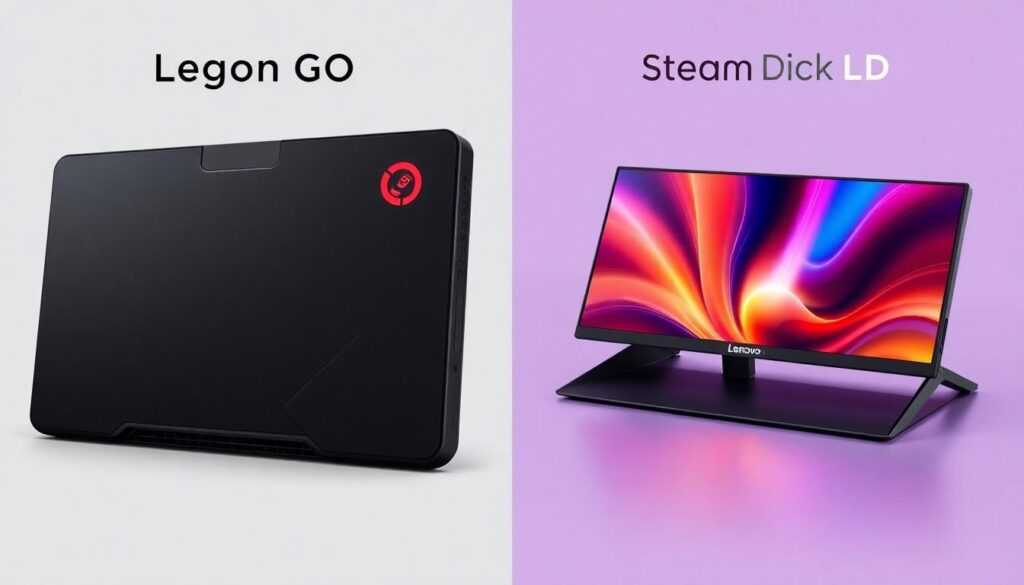
Design and build quality significantly influence user experience and device longevity. Both the Lenovo Legion Go and Steam Deck OLED offer distinctive attributes appealing to different gamers.
Dimensions and Weight
Lenovo Legion Go measures 12.2 x 5.5 x 1.4 inches and weighs approximately 2.4 pounds. Comparative measurements show a slightly larger profile than the Steam Deck OLED, which stands at 11.2 x 4.6 x 1.3 inches and weighs around 1.5 pounds. While heavier, the Legion Go promotes superior performance suited for extended gaming sessions. Steam Deck OLED remains lightweight, enhancing portability for gamers on the go. Each device prioritizes comfort and usability throughout prolonged gameplay.
Material and Aesthetics
Lenovo Legion Go features a sturdy plastic chassis complemented by an aggressive design that appeals to gaming enthusiasts. Its matte finish reduces fingerprint visibility, maintaining an aesthetic quality. Contrarily, the Steam Deck OLED adopts a sleek, minimalist appearance with a robust plastic shell. The OLED variant showcases vibrant colors, specifically enhancing visual appeal. Both devices embrace ergonomic elements, ensuring they fit comfortably in hands during long sessions. Users appreciate the distinct looks and feel of each device, catering to personal preferences in gaming aesthetics.
Display Features
Display quality significantly impacts the overall gaming experience. The Lenovo Legion Go and Steam Deck OLED showcase distinct strengths in this area, appealing to different preferences among gamers.
Screen Size and Resolution
The Lenovo Legion Go features a 7-inch display with a resolution of 2560 x 1600 pixels. This combination ensures sharp visuals and an immersive experience. In comparison, the Steam Deck OLED has a slightly smaller 7-inch display but opts for a resolution of 1280 x 800 pixels. While both screens offer adequate sizes for handheld gaming, the higher resolution of the Legion Go provides more detail in graphics, catering to gamers who appreciate crisp imagery. Gamers looking for larger displays may find the Legion Go more enticing, while those focused on portability might prefer the Steam Deck OLED.
Color Accuracy and Brightness
Color accuracy and brightness levels distinguish the two devices. The Lenovo Legion Go excels with its color reproduction, providing vibrant hues in games. Reportedly, this device achieves brightness levels up to 500 nits, allowing for a comfortable viewing experience even in well-lit environments. Conversely, the Steam Deck OLED benefits from its OLED panel capable of delivering deeper blacks and enhanced contrast. Its brightness reaches a peak of 600 nits, making visuals pop with vibrancy. Gamers who prioritize color depth and dynamic ranges might gravitate towards the Steam Deck OLED, while those favoring overall brightness and accuracy could lean toward the Legion Go.
Performance Comparison
The performance of the Lenovo Legion Go and Steam Deck OLED showcases distinct strengths, appealing to different gaming preferences.
Processor and Graphics
Intel’s processor powers the Lenovo Legion Go, ensuring high-speed performance and exceptional graphics. Advanced integrated graphics deliver smooth visuals in demanding games. In contrast, the Steam Deck OLED features a custom AMD APU combining CPU and GPU capabilities for an efficient gaming experience. This integration results in playable frame rates across a wide range of titles, though some resource-intensive games may perform better on the Legion Go. Gamers who prioritize graphical fidelity may lean toward the Legion Go, while those enjoying a variety of games and optimizing overall performance might prefer the Steam Deck OLED.
Battery Life
Battery life for the Lenovo Legion Go supports extended gaming with approximately 6 hours on a single charge when playing high-performance titles. Efficient power usage allows for moderate gaming sessions, but higher graphics settings can reduce longevity. The Steam Deck OLED manages power consumption effectively, offering between 2 to 8 hours based on gaming demands. Users can expect longer sessions with less demanding titles, balancing performance and efficiency. Gamers often appreciate the flexibility of the Steam Deck OLED, while those valuing consistent high performance over battery longevity may choose the Lenovo Legion Go.
Gaming Experience
Both the Lenovo Legion Go and Steam Deck OLED offer distinct gaming experiences, shaped by their game libraries and controls.
Game Library and Compatibility
Accessing a diverse game library significantly impacts the gaming experience. The Steam Deck OLED operates on a modified version of SteamOS, ensuring compatibility with a vast selection of games available on Steam. Gamers can easily navigate their libraries, downloading titles from popular franchises and indie developers alike. In contrast, the Lenovo Legion Go runs on Windows, appealing to users who prefer a broader ecosystem. This flexibility allows gamers to access titles from platforms such as Steam, Epic Games Store, and more. Gamers seeking variety might favor the Legion Go’s expansive library, while those who strictly play Steam titles will appreciate the Steam Deck OLED.
Controls and User Experience
Control schemes influence gameplay and overall enjoyment. The Lenovo Legion Go features a layout similar to traditional gaming consoles, offering tactile buttons, thumbsticks, and additional customizable controls. Enhanced ergonomics support comfort and precision during extended sessions. The Steam Deck OLED also emphasizes user-friendly controls and includes trackpads for versatile gameplay options. Gamers can easily switch between thumbstick and trackpad usage, allowing for different playstyles. While the Legion Go provides a familiar console experience, the Steam Deck OLED caters to those exploring new control methods, enhancing user experience on both devices.
Price and Value
Pricing structures for the Lenovo Legion Go and the Steam Deck OLED reflect their distinct capabilities. The Lenovo Legion Go starts at approximately $699, appealing to gamers who favor high-performance specs and advanced hardware. In contrast, the Steam Deck OLED is priced around $549, targeting budget-conscious gamers seeking vibrant display qualities at a lower cost.
Consumers often evaluate the value offered by each device against its performance enhancement. The Lenovo Legion Go justifies its higher price through robust gaming laptop functionality, delivering superior graphics and processing power. Players focused on immersive gameplay often align their expectations with the performance deliverables of the Legion Go.
On the other hand, the Steam Deck OLED appeals to users who appreciate both affordability and excellent display features. Enthusiasts valuing color accuracy and contrast in their gaming experience find that the Steam Deck OLED meets their needs effectively. Despite its lower price, the Steam Deck OLED offers significant value through its compatibility with a broad game library.
Both devices incorporate unique features that resonate with different audiences. Gamers seeking lightweight options might lean toward the Steam Deck OLED, emphasizing portability over performance. Conversely, those who prioritize advanced capabilities will likely consider the Lenovo Legion Go for its gaming laptop traits.
Accessories also play a role in overall value. The Steam Deck OLED allows for various integrations, enhancing user experiences without draining budgets. With the Lenovo Legion Go, additional accessories can elevate performance further but may also add to the overall investment.
Ultimately, price and value hinge on individual preferences and gaming priorities. Heavily contrasting in functionality and cost, both devices cater to specific needs, ensuring gamers make informed choices based on their gaming styles and requirements.
Conclusion
Choosing between the Lenovo Legion Go and the Steam Deck OLED boils down to personal gaming preferences. The Legion Go stands out for its powerful performance and high-resolution display, making it ideal for gamers seeking top-tier graphics and processing capabilities. On the other hand, the Steam Deck OLED shines with its vibrant visuals and extensive game library, appealing to those who value comfort and portability.
Both devices offer unique advantages that cater to different gaming styles. Whether one prioritizes performance or display quality, there’s a suitable option for every gamer. Ultimately, understanding individual needs will guide the decision, ensuring a rewarding gaming experience tailored to specific desires.

